

Aviation/Land & Intermodal Logistics
Course overview
Prepare senior logistics and operations leaders to design, digitise and optimise high‑performance multimodal networks across air, land and last‑mile delivery. This executive programme focuses on practical strategies, data‑driven tools and governance needed to balance cost, speed and sustainability while navigating regulatory complexity and urban logistics challenges.

This image was generated using AI-Know, powered by Google's Imagen 4 model.
What the course covers
- Overview of key megatrends reshaping logistics: digitalization (AI, automation), rapid/q-commerce, sustainability (net-zero, EVs), autonomous mobility, and workforce transformation.
- Overview of the aviation industry, focusing on airport logistics and air cargo supply chain, preparedness for aviation safety and security, stakeholder management for connectivity and compliance, and operational efficiency across the aviation ecosystem.
- Tax barriers and optimization strategies for cross-border trade (outbound & inbound), covering related-party transactions, storage facilities, reinvoicing, tax havens, IP management, and e-commerce tax issues.
- Urban logistics transformation driven by e-commerce and demographic shifts, covering last-mile strategies, intermodal transport optimisation (air/sea/land), network design, ESG compliance, and transport management systems.
Learning outcomes
- Understand how digitalisation (AI, computer vision, and automation), q-commerce, sustainability goals, autonomous vehicles and intelligent intermodal transport systems impact the supply chain, movement of goods and workforce composition.
- Appreciate the fundamentals of the aviation industry, the role of international trade and transshipment hub, management of aviation ecosystem and its stakeholders for connectivity and compliance.
- Understand the tax implications of cross-border trade and investments, and strategies to manage the compliance and risks associated with establishing physical presence in foreign countries.
- Identify social and environmental factors driving change in urban logistics and transport planning
- Develop strategies for urban logistics optimisation using last-mile tools (dynamic routing, micro-fulfilment, urban consolidation centres) and public-private partnerships.
- Design multimodal networks that balance cost, lead time, and sustainability to optimise intermodal transportation.
- Learn about playbooks for optimizing air-to-land handoffs, last-mile cost reduction, and on-time performance.
- Leverage transport management systems to manage goods movement and enforce 3PL performance contracts.
Who should attend
Logistics and transport directors, operations and distribution managers, airport and cargo planners, 3PL and carrier strategists, e‑commerce and last‑mile leaders, supply‑chain transformation sponsors, and policy/compliance professionals involved in multimodal logistics.
Trainers

Associate Professor Sarah Cheah
Dr Sarah Cheah is an Associate Professor at NUS Business School, with research and practice in corporate entrepreneurship, sustainability, and technological innovation. Her work extends into the logistics and maritime sectors — she received Singapore Maritime Institute funding for a project benchmarking maritime research, technology, and innovation clusters, as well as NOL Foundation funding for scenario planning and forecast of maritime trading and shipping. She is affiliated with the NUS Centre for Maritime Studies, reflecting her interdisciplinary engagement across transport and trade ecosystems.
Her recent book with Routledge, Corporate Entrepreneurship and Sustainability, features case studies of logistics and transportation companies such Legend Logistics Limited on sustainable shipping through digital transformation and Uber on rapid scaling through autonomous technologies. As a Member of the Board of Directors at the Chartered Institute of Logistics and Transport Singapore (CILT) and former Vice President of A*STAR commercialization arm, she brings extensive expertise in innovation management and logistics. She has engaged with Singapore's aviation sector, advocating physical AI and robotics solutions to optimize gateway services, in research commercialization projects funded by the National Robotics R&D Program Office.

Mr Karmjit Singh
Mr Karmjit Singh is a distinguished figure in international aviation, airport logistics and public transport, who has helmed leadership positions in these fields in Singapore for more than three decades. Karmjit was the Chief Operating Officer of Singapore Airport Terminal Services (SATS) until his retirement in 2009. Prior to his stint in SATS, he was with Singapore Airlines for 24 years, serving in senior management positions covering Corporate Affairs, Public Affairs, Corporate Planning, Aviation Fuel, Commercial Purchasing and Administrative Services. He was Chairman of SATS Security and Chairman of Asia Airfreight Terminal, Hong Kong (SATS JV) and Chairman Aerolog Express (SATS JV), Director of Virgin Aviation Services and Director of Taj-SATS Catering, India (SATS JV). He also served as a Board Member of the Air Transport Action Group (ATAG), a part of the IATA, from 1995 to 2006. He was conferred the Singapore Public Service Medal (PBM) in 2014 and the Public Service Star Medal in 2018 (BBM). He graduated from the University of Singapore with a Bachelor of Arts in Geography (Honours-Gold Medal).
Associate Professor Stephen Phua
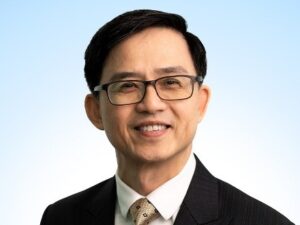
Dr Stephen Phua is a Partner at Allen & Gledhill and Associate Professor in the Faculty of Law at the National University of Singapore (NUS), teaching and practicing in tax, VAT/GST, international tax law and business & finance. He serves as the co-Director of the LL.M (International Business Law) programme and an Academic Fellow at the EW Barker Centre for Law and Business. He was visiting faculty in several academic institutions in Singapore, Australia, Canada, China, Japan, Switzerland, and the USA. He was a member on all the three tax tribunals in Singapore (Income Tax Board of Review, GST Board of Review and Valuation Review Board), each for more than a decade. A former consultant to the Inland Revenue Authority of Singapore (IRAS), he is frequently sought as an expert on Singapore tax laws by foreign tax authorities and taxpayers in international arbitration as well as domestic disputes. For his contributions to Singapore, Stephen was conferred the Long Service Medal (PBS) in 2016, the Public Service Medal (PBM) in 2020, and the Public Service Star (BBM) in 2025.

Mr Edward Lau
Mr Edward Lau is the Chief Executive Officer of Pointline Enterprise Private Limited, a leading strategic consulting firm specializing in aviation, transportation, supply chain, e-commerce fulfilment, joint ventures, and M&A integration. With a distinguished career spanning over three decades, Edward has held key leadership roles in prominent organizations across the globe. Before leading Pointline, he served as the President, Asia, at Landmark Global, a subsidiary of bpost, where he facilitated international expansions for cross-border e-commerce businesses. Edward’s expertise extends to the aviation industry, having been the CEO of Jetstar Hong Kong Airways, a startup low-cost carrier. He held various senior positions at TNT Express Worldwide, including Managing Director in Hong Kong, where he oversaw North Asia operations and expanded cross-border logistics. Edward holds Graduate Diploma in Business Communications from The Chinese University of Hong Kong and a Postgraduate Award in Management and Business Studies from the University of Warwick. Beyond his professional achievements, Edward is dedicated to education, serving as guest lecturers at various universities and contributing to corporate mentorship programs.